PART 1&2 DUE: 11:59 PM THURSDAY, OCTOBER 22
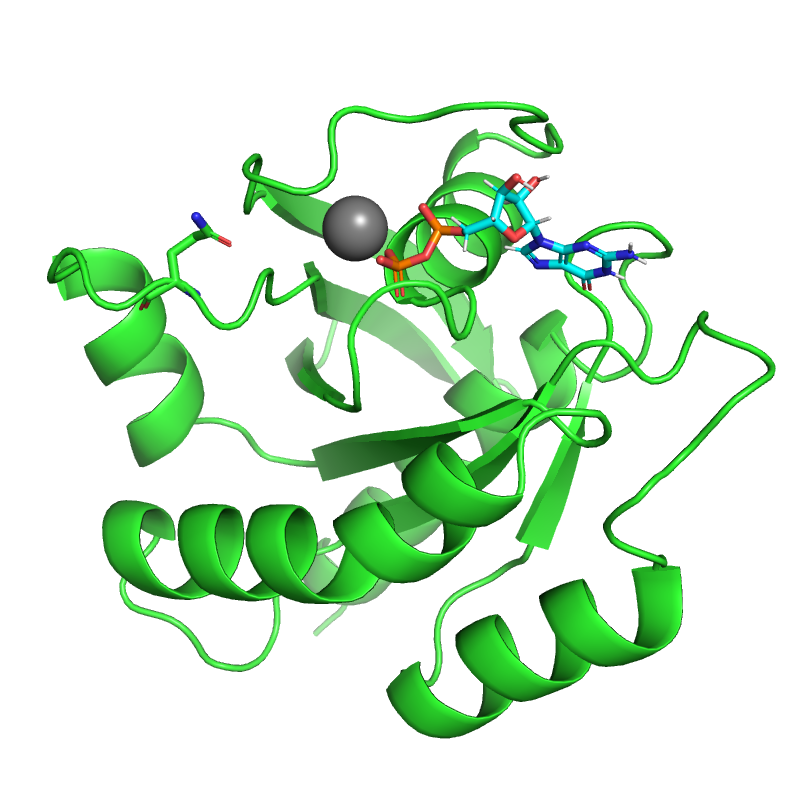
In this assignment we will continue our adventures in molecular dynamics and analysis by simulating and analyzing NRAS Q61R when bound to its substrates GDP and GTP.
Part 1
We provide all the starting structures needed:
There are two distinct conformations of the protein, gdp_boundandgtp_bound`, which correspond to the inactive and active conformations. The PDB files have the coordinating Mg ion, but not GDP/GTP. The substrate is provided as a separate file since it needs to be parameterized by OpenFF.
We also provide a complete script for running a protein-ligand simulation:
Although we are not asking you to write simulation code, we will ask you questions about what the code is doing in the next part.
Use this script to run two 250 ns simulations of the Q61R protein, one in its GTP-bound conformation with GTP and the other in its GDP-bound conformation with GDP. As this will take some time and you may have to rerun if there are issues, you should plan on having the simulations running on the cluster as soon as possible.
We provide complete simulations of the WT protein here:
Analysis
You will need to fill in the missing code in the following file to perform two analyses of your simulations:
This script takes a topology and trajectory, a ligand selection string, and two selections for comparing contacts between:
./analysis.py --topology gtp_bound_wt/system.pdb --trajectory gtp_bound_wt/trajectory.dcd --ligand_sel "resname UNL" --selA 'not name H* and resid 61' --selB 'not name H* and byres around 4 (resid 61)' --output_prefix gtp_bound_wt
RMSD Analysis
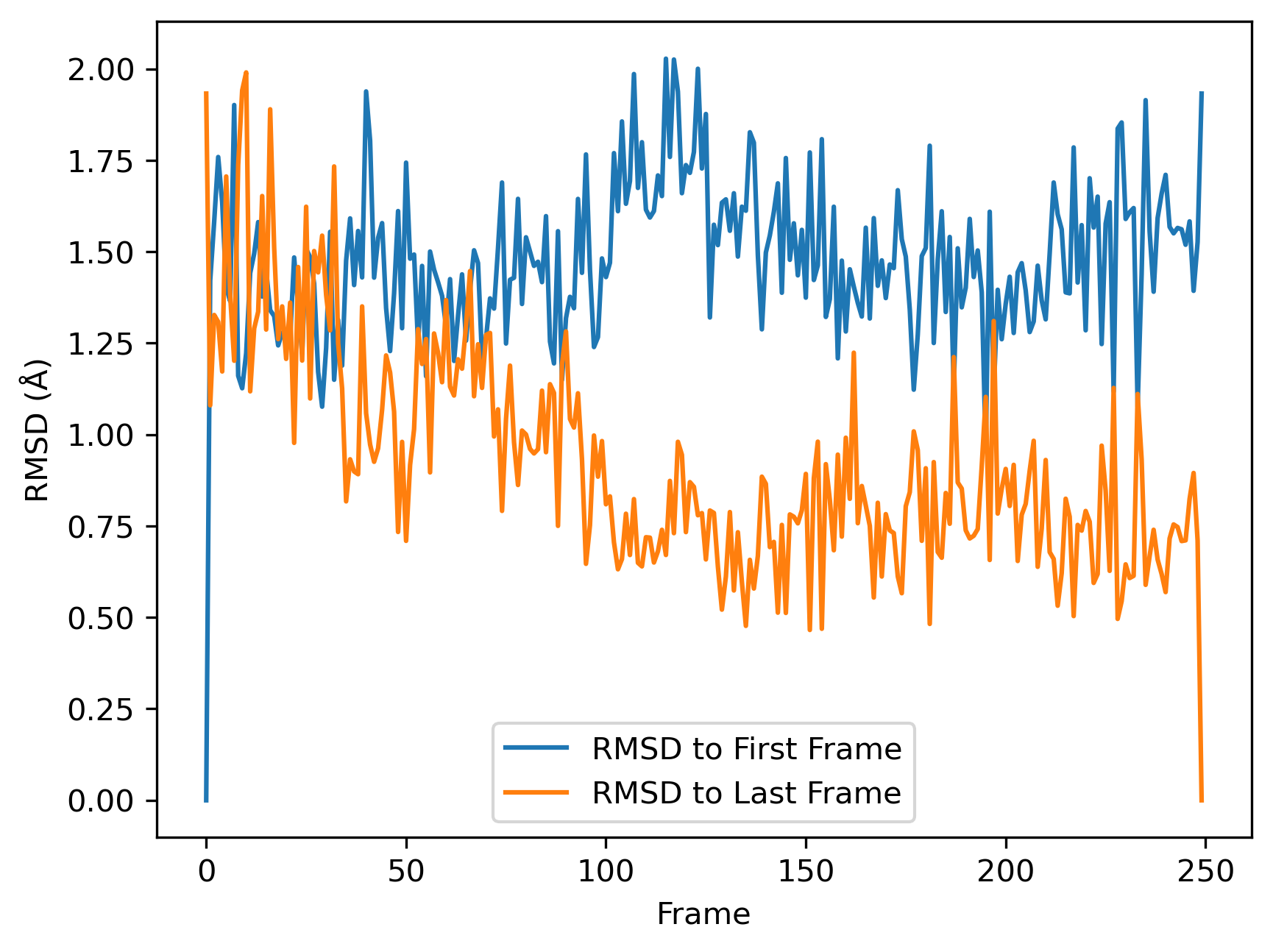
As you have done previously, calculate and plot the RMSD of the ligand (as defined by the ligand_sel string) with respect to the first and last frame. Since the simulation should be aligned to the alpha carbons of the first frame, this will tell you how the ligand is moving with respect to the protein.
Contact Analysis
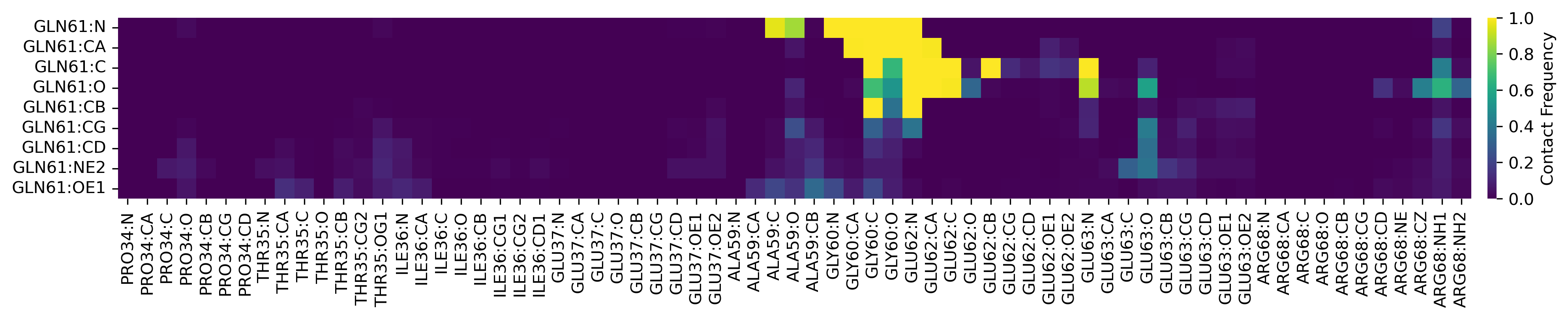
The script additionally takes two selections (and an optional cutoff distance). You should use these to calculate contact frequencies between the two atom selections.
For this part, upload your script to the autograder for checking.
Part 2
Answer the GradeScope Questions